Three days in Hanoi is enough time to fall completely in love with this city — if you use them well. We’re not a travel blog passing through. We live and host here, in the Old Quarter, on Train Street, and by West Lake. This itinerary is the one we give our own guests: honest, practical, and full of the local tips that don’t make it into most guides.
Here’s exactly how we’d spend three days in Hanoi if it was our first time.
Before You Arrive: A Few Things Worth Knowing
Getting around: Download the Grab app before you land — it’s the local equivalent of Uber and works brilliantly in Hanoi. Most rides across the city cost between 30,000–80,000 VND (around $1–3 USD). Far cheaper and less stressful than negotiating with taxis.
Crossing the road: Traffic in the Old Quarter looks terrifying. The secret is to walk slowly and steadily — don’t run, don’t stop. Motorbikes will flow around you. It feels impossible on day one and completely natural by day two.
Cash: Vietnam is still largely cash-based. ATMs are everywhere in the Old Quarter. The exchange rate is around 25,000 VND to $1 USD — you’ll quickly get used to thinking in hundreds of thousands.
Best time to visit: September to November and March to April are ideal — mild temperatures, lower humidity, and fewer crowds than peak summer. Avoid July and August if you can; the heat and rain can be intense.
Day 1: The Old Quarter & Hoan Kiem Lake
Start where Hanoi’s story begins. The Old Quarter is one of the most intact ancient commercial districts in Southeast Asia — 36 guild streets, each historically dedicated to a single trade, still buzzing with the same energy they’ve had for a thousand years. Give yourself a full day here to wander, eat and absorb.
Morning: Egg Coffee and the Old Quarter Streets
Start the day the way Hanoi does: with coffee. Your first stop should be Cafe Giang (39 Nguyen Huu Huan) — the tiny, wonderfully chaotic alley café where Vietnamese egg coffee, cà phê trứng, was invented in 1946. Sit on a plastic stool, order the egg coffee, and take a moment to appreciate that you’re tasting something that doesn’t exist anywhere else in the world.
From here, spend the next two hours getting gloriously lost in the Old Quarter. There’s no single route — just wander. Head down Hang Gai (Silk Street), cut through Hang Bac (Silver Street), and keep an eye out for the dozens of small temples tucked between shophouses. The streets change character every hundred metres.
Mid-Morning: Hoan Kiem Lake & Ngoc Son Temple
Hoan Kiem Lake is the emotional centre of Hanoi — a 12-hectare lake surrounded by trees and gardens, just south of the Old Quarter. Walk the full loop (about 1.8km), take your time, and watch the city go about its morning. Early risers will find elderly locals doing tai chi by the water; by mid-morning the cafés along the banks are buzzing.
Cross the red Huc Bridge to visit Ngoc Son Temple, a small but beautiful temple sitting on a small island in the lake. Entry costs around 30,000 VND. Don’t miss the enormous preserved turtle on display inside — a reminder of the lake’s legendary connection to Vietnam’s ancient kings.
Lunch: Bun Cha
For lunch, hunt down a bún chả spot — grilled pork patties served in a sweet fish sauce broth with rice noodles and fresh herbs. It’s Hanoi’s most iconic dish. Bun Cha Huong Lien (24 Le Van Huu) became internationally famous when Anthony Bourdain and Barack Obama ate here together in 2016. It’s touristy but genuinely good. For something more local, ask your host — every Hanoian has a favourite.
Afternoon: Hoa Lo Prison
Hoa Lo Prison (also known as the “Hanoi Hilton”) is one of the most fascinating and sobering museums in Vietnam. Built by the French in 1896 and later used to hold American POWs during the Vietnam War, it tells multiple layers of a complex history. Allow 90 minutes and go in the afternoon when it’s less crowded. Entry is around 30,000 VND.
Evening: Bia Hoi Corner & the Night Market
As the sun goes down, make your way to Ta Hien Street — Hanoi’s famous “Beer Street” and one of the most lively corners in the city. Pull up a tiny plastic stool on the pavement and order a bia hoi, freshly brewed draught beer that costs around 7,000 VND (about 30 cents). It’s a quintessential Hanoi experience.
On Friday, Saturday and Sunday evenings, the Hang Dao Night Market fills the Old Quarter streets with food stalls, street vendors and live entertainment. Perfect for an evening wander and picking up a souvenir or two.
Staying in the Old Quarter? Our apartment puts you in the middle of everything on Day 1 — Cafe Giang, Hoan Kiem Lake and Ta Hien Street are all within a 10-minute walk. Book the Urban Quarter apartment →
Day 2: History, Culture & Train Street
Day two takes you west into the Ba Dinh district — Hanoi’s political and cultural heartland — before finishing with the city’s most unforgettable experience: Train Street in the evening.
Morning: Ho Chi Minh Mausoleum Complex
The Ho Chi Minh Mausoleum is one of the most visited sites in Vietnam — a vast, Soviet-influenced monument where Ho Chi Minh’s embalmed body lies in state. The complex is only open in the early morning (7:30am–10:30am, Tuesday to Thursday and Saturday to Sunday), so this must be your first stop. Go early to avoid queues. Dress respectfully — covered shoulders and knees required.
Around the complex you’ll also find the beautifully stilted Ho Chi Minh’s Stilt House, the One Pillar Pagoda (one of Vietnam’s most iconic structures, built in 1049), and the Ho Chi Minh Museum. Allow at least two hours for the whole area.
Mid-Morning: Temple of Literature
A short Grab ride south brings you to the Temple of Literature (Van Mieu) — Vietnam’s first university, founded in 1070, and one of the best-preserved examples of traditional Vietnamese architecture in the country. The complex is spacious, leafy and peaceful. Give yourself an hour to wander through its five courtyards and read the stone stelae recording the names of doctoral graduates from the 15th century onwards. Entry is 30,000 VND.
Lunch: Pho
Hanoi is the birthplace of phở — and Hanoian pho is notably different from what you’ll find in the south: clearer broth, fewer additions, and a more austere, deeply savoury flavour. Pho Thin (13 Lo Duc) is a Hanoi institution that has been serving the same recipe since 1955. Arrive before noon or expect a wait.
Afternoon: Imperial Citadel of Thang Long
The Imperial Citadel of Thang Long is a UNESCO World Heritage Site and one of Hanoi’s most underrated attractions. This 11th-century royal complex was the political centre of Vietnam for nearly 13 centuries. The excavations beneath the citadel — revealing layer upon layer of civilisations — are genuinely extraordinary. Allow 1.5–2 hours. Entry is 30,000 VND.
Evening: Train Street
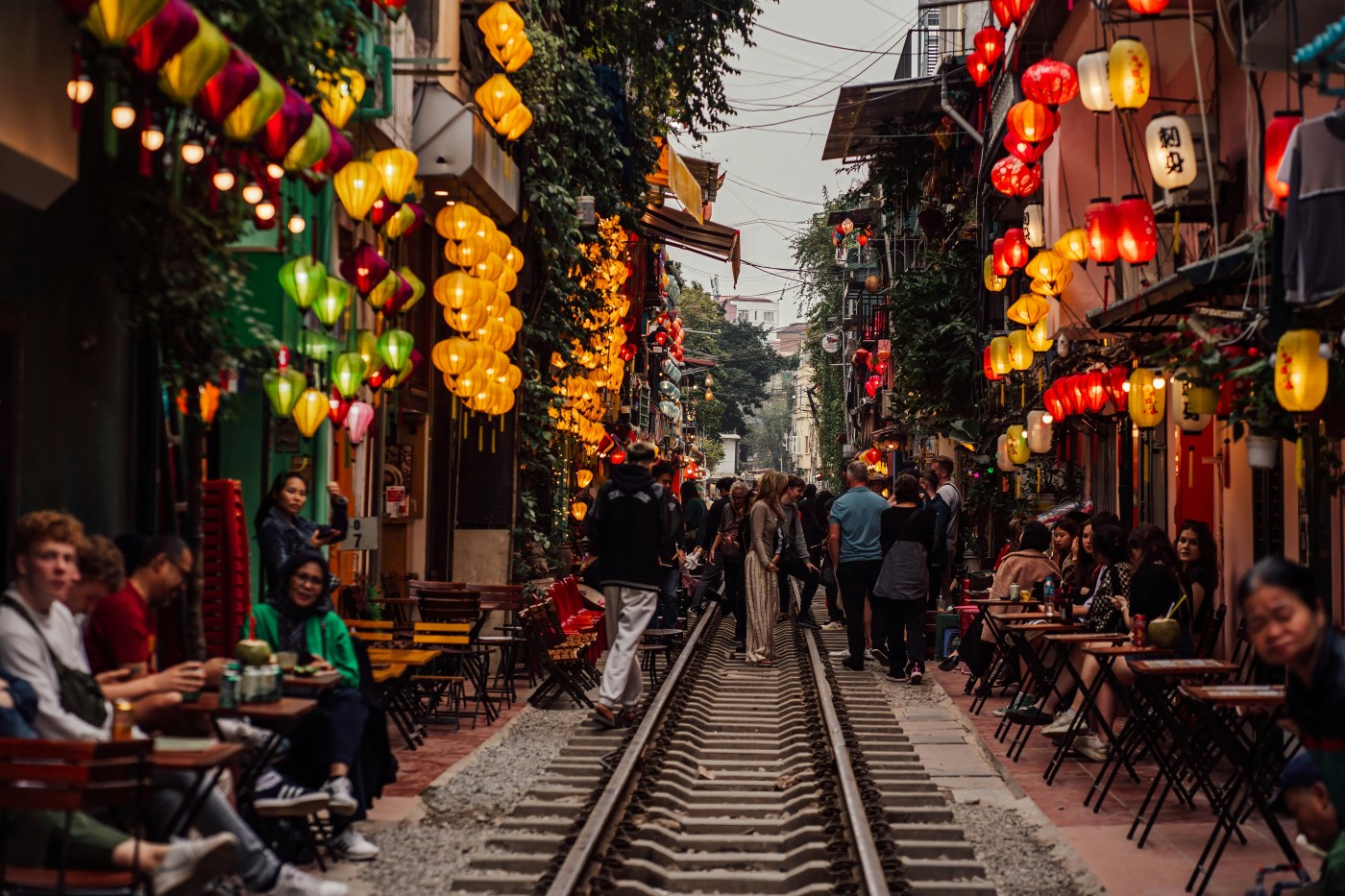
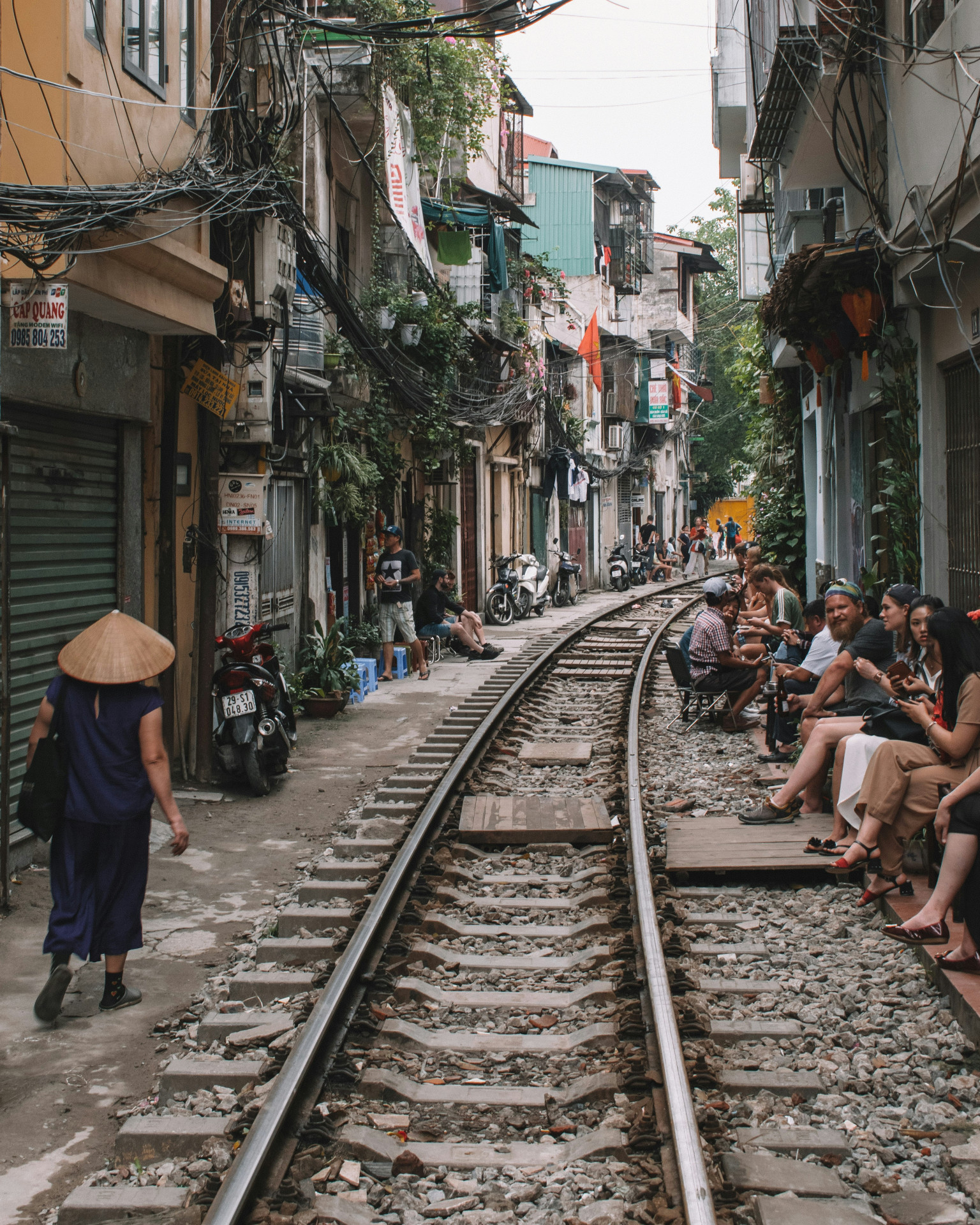
Save Train Street for the evening — this is when it’s most atmospheric. Head to the Le Duan section of the track (search “Ngo 224 Le Duan” in Google Maps) for a more relaxed, local experience than the more crowded Phung Hung section. Find a café along the tracks, order a drink, and wait.
When the train comes — and it passes at roughly 7:00pm and 7:45pm most evenings — it rolls through with just centimetres to spare from the buildings on either side. It’s loud, thrilling, and over in about 30 seconds. Then everyone laughs, orders another drink, and waits for the next one. Stay for at least two trains.
Want Train Street right outside your door? Our apartment on Le Duan is the most unique stay in the city. Book the Train Street apartment →
Day 3: West Lake, Water Puppets & a Farewell Feast
Spend your final day in a completely different Hanoi — the one the locals actually live in. West Lake (Tây Hồ) is calm, beautiful and full of the city’s best cafés, temples and lakeside walks. End the evening with a water puppet show, one of Vietnam’s most ancient art forms.
Morning: Tran Quoc Pagoda & West Lake Walk
Grab a Grab to West Lake and start with Tran Quoc Pagoda — the oldest Buddhist temple in Hanoi, over 1,500 years old, sitting on a small peninsula in the lake. Go early (before 9am) when it’s quiet and the light on the water is beautiful. The sacred Bodhi tree in the grounds was grown from a cutting of the tree under which the Buddha is said to have gained enlightenment.
From here, walk the Tay Ho lakeside path heading east along Trich Sai and Van Cao streets. The views across the lake are stunning, the streets are lined with independent coffee shops, and it feels nothing like the tourist centre of the city. This is where locals come on Sunday mornings.
Mid-Morning: Coffee at West Lake
Stop for coffee at Santorini Vibes Café (181 Nhat Chieu) for the best lake view in the city — white-washed walls and blue domes against the water, best appreciated with a Vietnamese iced coffee in hand. Or visit Manzi Art Space (14 Phan Huy Ich) if you’d like to combine your coffee with a wander through a beautiful gallery in a restored French villa.
Lunch: Bun Oc (Snail Noodle Soup)
West Lake is famous for bún ốc — snail noodle soup, a tangy, fragrant broth packed with fresh snails, tomatoes and herbs. It sounds unusual; it tastes incredible. Ask any local café owner to point you to their favourite bún ốc spot on Tay Ho Street. This is as authentically local as lunch gets.
Afternoon: Vietnam Museum of Ethnology (Optional)
If you have a cultural appetite left, the Vietnam Museum of Ethnology (Nguyen Van Huyen, Cau Giay) is one of the best museums in the country — a fascinating overview of Vietnam’s 54 ethnic groups, with full-scale traditional houses in the outdoor gardens. Entry is 40,000 VND. Alternatively, spend the afternoon back by the lake with a book and an iced coffee — you’ve earned it.
Evening: Water Puppet Show & Farewell Dinner
End your three days with a performance at the Thang Long Water Puppet Theatre (57B Dinh Tien Hoang, by Hoan Kiem Lake). Water puppetry is over 1,000 years old — performed over a flooded stage, with wooden puppets controlled by rods hidden beneath the water, accompanied by live traditional music. Shows last around 45 minutes and cost around 100,000 VND. Book in advance — performances sell out, especially on weekends.
For your farewell dinner, head back to the Old Quarter and find a street-side bánh mì stall for a late snack, or treat yourself to a meal at Cha Ca La Vong (14 Cha Ca Street) — a Hanoi institution serving just one dish: turmeric-marinated fish grilled at your table, served with rice noodles, dill and peanuts. It’s been on that menu since 1871.
Prefer a calm West Lake base? Our apartment in Tay Ho is perfect for Day 3 — and for anyone staying longer than three days. Book The Urban Tranquil at West Lake →
3-Day Hanoi Itinerary: Quick Reference
| Day |
Morning |
Afternoon |
Evening |
| Day 1 |
Egg coffee, Old Quarter wander, Hoan Kiem Lake |
Hoa Lo Prison |
Bia Hoi Corner, Night Market |
| Day 2 |
Ho Chi Minh Mausoleum, Temple of Literature |
Imperial Citadel |
Train Street (7pm train) |
| Day 3 |
Tran Quoc Pagoda, West Lake walk & coffee |
Museum of Ethnology or lakeside relax |
Water Puppet Show, farewell dinner |
Where to Stay for Your 3 Days in Hanoi
The neighbourhood you choose as your base will shape your entire experience. We have apartments in the three best locations in the city — all fully furnished with a kitchen, free WiFi, lift access and a local team who can give you the tips that aren’t in any guide.
🏮 Old Quarter — best for first-timers who want to be in the thick of it
Book the Urban Quarter apartment →
🚂 Train Street — best for a truly unforgettable, one-of-a-kind stay
Book the Train Street apartment →
🌊 West Lake (Tây Hồ) — best for longer stays, remote workers and those wanting a calmer, more local experience
Book The Urban Tranquil at West Lake →
Not sure which is right for you? Read our neighbourhood comparison guide →
Your Mini Vietnamese Language Guide (Speak Like a Local!)
While many people in Hanoi’s main tourist areas speak some English, learning a few basic phrases in Vietnamese will open doors and bring smiles wherever you go. Locals genuinely appreciate the effort, and it can make your interactions much more memorable.
Don’t worry about perfect pronunciation—just give it a try!
Essential Greetings & Courtesies
These are the basics you’ll use every day.
Hello – Xin chào (sin chao)
Goodbye – Tạm biệt (tahm bee-et)
Thank you – Cảm ơn (gahm uhn) – This is the most important one!
Yes – Vâng (vuhng) – A polite, formal “yes.”
No – Không (khom)
Excuse me / Sorry – Xin lỗi (sin loy)
Navigating & Getting Around
Useful for taxis, Grab, or asking for directions.
Go straight – Đi thẳng (dee tahng)
Turn left – Rẽ trái (zeh chigh)
Turn right – Rẽ phải (zeh figh)
Stop here – Dừng ở đây (zung uh day)
How much? – Bao nhiêu? (bow nyew) – Useful for everything!
Eating & Drinking (The Fun Part!)
Impress your street food vendor with these.
Delicious! – Ngon quá! (ngon qwa)
Check, please / The bill, please – Tính tiền (teen tee-en)
One more, please – Thêm một (tem moht)
Spicy? – Cay không? (kay khom?)
Not spicy – Không cay (khom kay)
Water – Nước (nook)
Beer – Bia (bee-ah)
Shopping in the Markets
A little bit of friendly bargaining can be part of the fun.
Too expensive – Đắt quá (dat qwa)
Can you lower the price? – Bớt được không? (buht dook khom?)
Just remember to always be friendly and smile. A little effort with the local language will make your Hanoi adventure even richer!
Join The Discussion